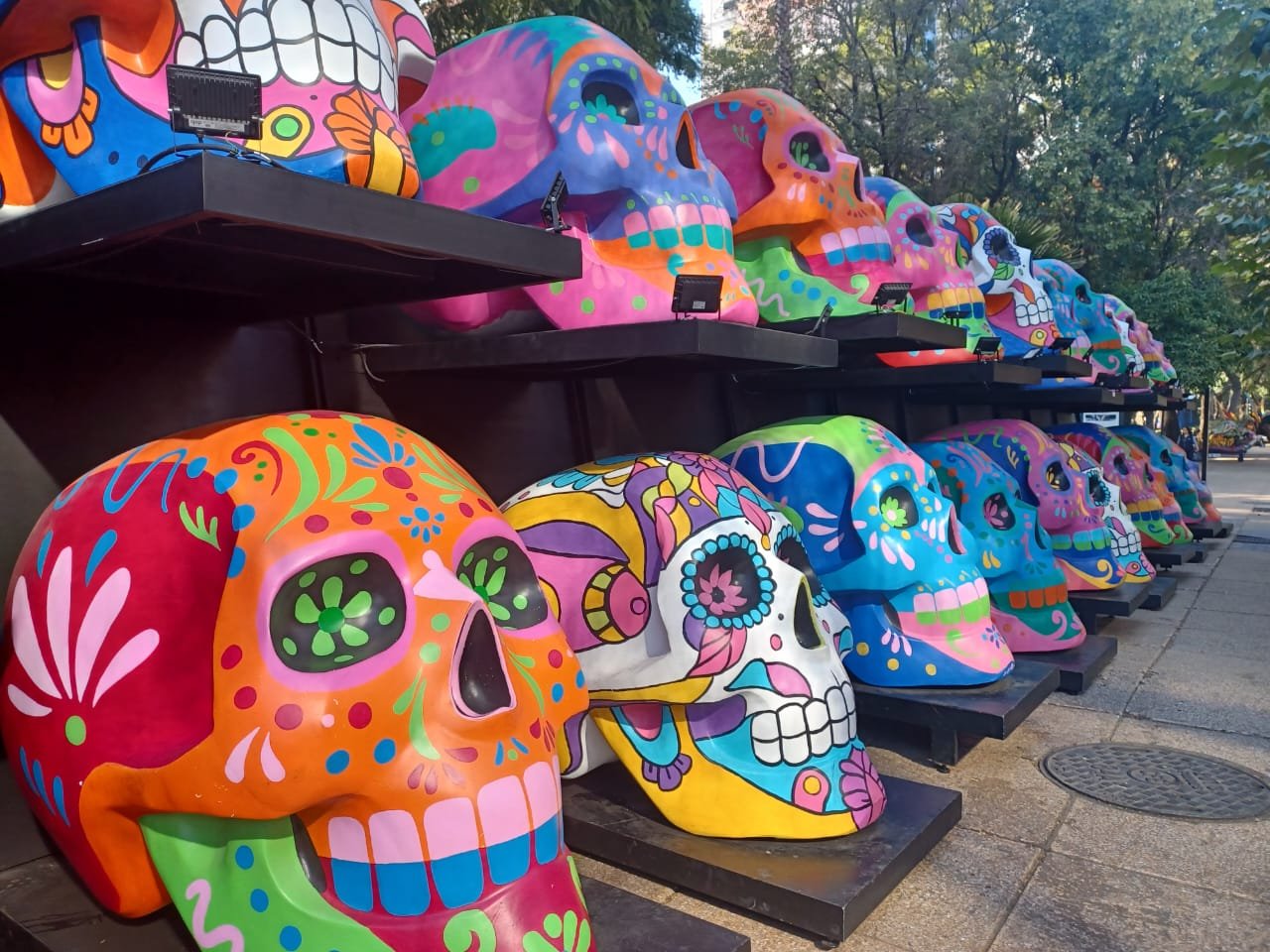
This has been the most difficult blog that I have written so far, possibility because it led to many reflections on my own culture and upbringing, most of which goes beyond the scope of a single blog. There’s such a strong emphasis in the pagan community of connecting to your ancestors and I do not think I’m the only person who feels unable to connect with one’s immediate ancestors. This could be, as it is in my case, it’s culturally inappropriate, or it could be that one does not want to honour ones ancestors as they are simply not nice people. This can lead one to feeling a bit “adrift” within the sea of Samhain, not being certain of how to approach it. An obvious way through is to connect to ones magical ancestors which I have done, but for me that’s not quite sufficient. Many of the chaos magician’s magical ancestors, while rooting me within my own paradigm of magick do not connect me to place and birth culture, few chaos magician ancestors were welsh.
In the culture that I grew up in going to the graveyard and remembering your ancestors is something that was frowned upon. The deceased were cremated, buried and you were supposed to move on with your life and forget about them.
While I’m down with the living of your life despite the loss and grief; not being able to visit their graves was hard. As a child I did not even know where they were buried and I still don’t know where many of my ancestor’s remains are. This cutting off of the remembrance has been troublesome in my magical life as connecting to ones ancestors can be a great source of strength. Their DNA runs through me, I carry their strengths and their difficulties, but they would not have approved of my calling on them or visiting them. So I don’t.
I have heard many Hoodoo practitioners say that you stand on the shoulders of everyone that came before you and connecting with your ancestors gives grounding to one’s magical practice. However, my immediate ancestors made it very clear in life that one is supposed to forget all about the dead and move on with your life. I have discovered not everyone in Wales of my generation was raised this way and this was very faith specific. In the faith that I was raised, the interpretation of the Bible is that there cannot be any connection or communication between the dead and the living which is why calling on the saints or ancestors was not done.
As my childhood faith rejected the doctrine of purgatory it was felt that prayers do not help the dead. The view was that when people die they go either to Heaven or to Hell and there they stay for eternity and prayers do not change that. While there is nothing in the bible that prohibits the visiting of graves, there was an unwritten yet audible rule against doing so.
Back in the day, when I was a child, women did not attend the funerals. The funeral consisted of meeting in the house of the deceased or of the nearest relative. The minister would conduct the service there and only the men and boys over the age of twelve would actually go to the cemetery. Times have changed since then and women attend now but I had no experience of attending a funeral until I was an adult. This meant that as an adult I needed to learn how to manage issues to do with death as I had no grounding in this as a child. This of course raised my social anxiety through the roof the first time I attended a funeral as an adult, as I was on unfamiliar ground, not knowing what was expected of me or what to say. I’ve gotten better since then.
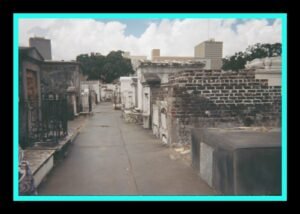
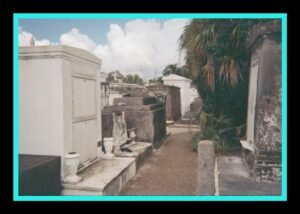
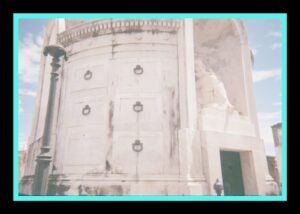
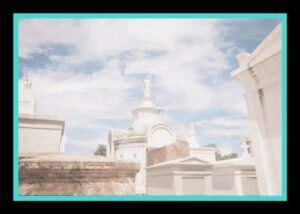
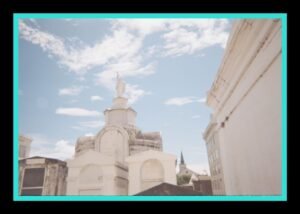
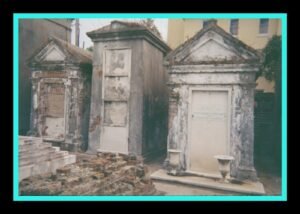
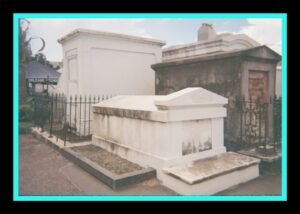
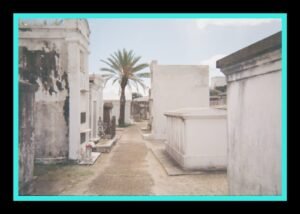
Coming from this culture where the forgetfulness of the ancestors is encouraged, as an adult I have become very interested in how other cultures view death and the different ways of honouring the deceased throughout the world. So when I am out and about on my travels I like to visit a cemetery to see how the deceased are honoured there. I was very excited back in 2018 to visit New Orleans Cemetery No 1 and see the family tomb of Marie Laveau, despite having inadvertently booked one of the least enthusiastic tour guides ever.
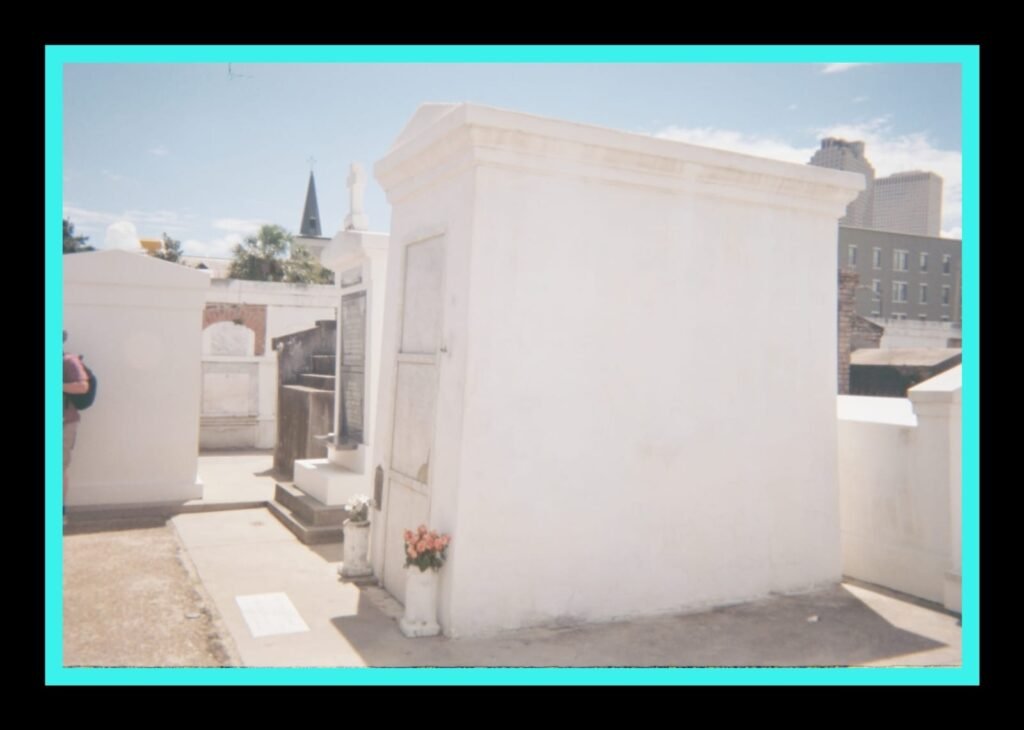
New Orleans 2018
One has to book a tour guide to visit some of the New Orleans cemeteries as the tourist is not allowed into some of them without an official guide. The reluctant guide did everything in his power to persuade us against doing things that were on the tour itinerary; only to be thwarted by myself and my enthusiasm, which I believe was a bit tiresome for him. On our approach to the cemetery I could see the glimmer of hope in his eyes as it started to rain. He discouraged us from going in saying, “you don’t want to go in when it’s raining do you?” Dashing his hopes of an early finish I said “of course we do, it’s the best time to go as it’ll be too hot in the cemetery with the sunlight bouncing back off those white tombs, and rain is perfect!” Reluctantly he led us in. Much to his disgust the rain cleared up. This was the same tour guide who later on said to us with a tangible lack of enthusiasm, “I have to ask you if you want to go to Congo Square” and I’m like, I’ve travelled across an ocean to be here and your thinking I won’t want to go to the birth place of jazz and where legend says Marie Laveau conducted her public ceremonies! The Guide had a tepid approach to his work; I was like a child in a candy store, sufficient to say we did not vibe.
Despite the challenge of dealing with this lacklustre tour guide I saw that the dead were not hidden in New Orleans. Their lives are celebrated and many people believe that the dead still walk among the living in the city. A woman working in a Botanica told me that the reason why so many tourists have “lost weekends” in New Orleans is due to being possessed by the Ghede spirits who have borrowed their body for a while to be able to experience the physicality of a party.
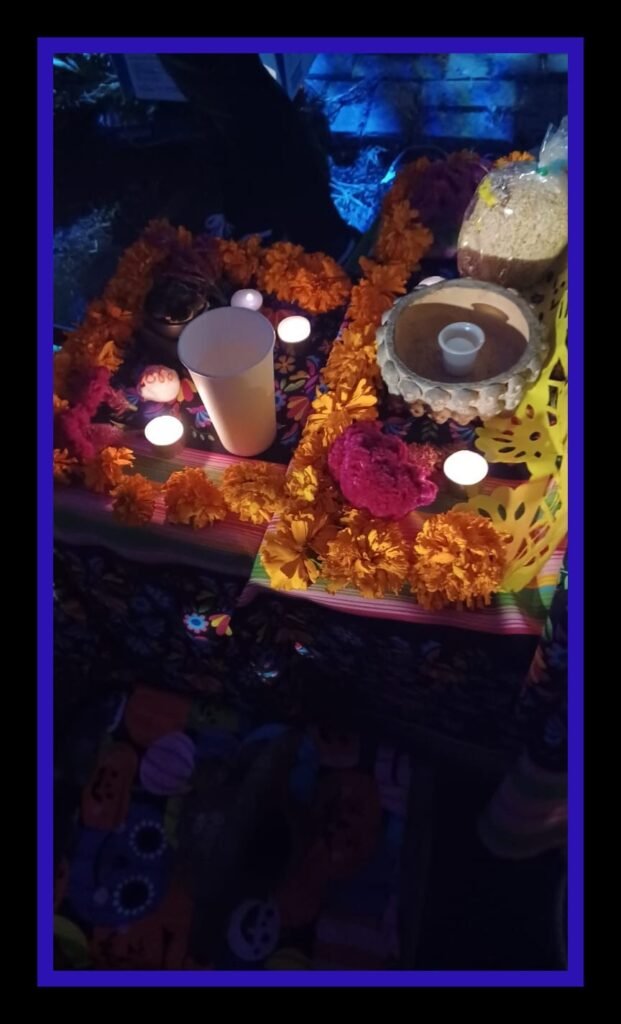
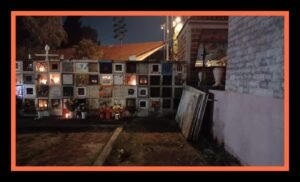
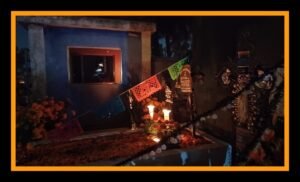
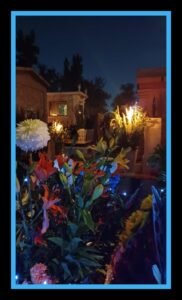
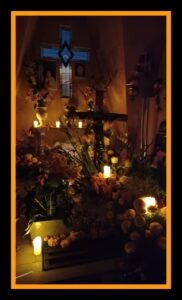
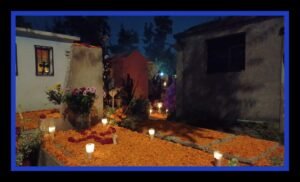
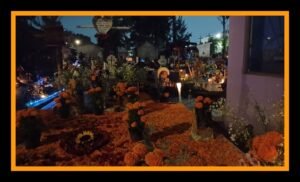
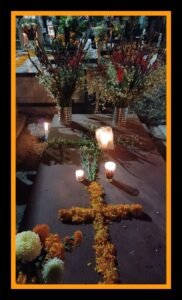
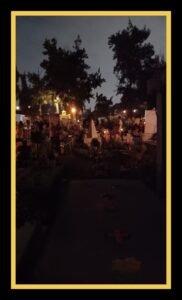
Tlahuac, 2025
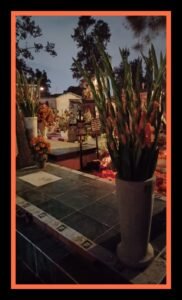
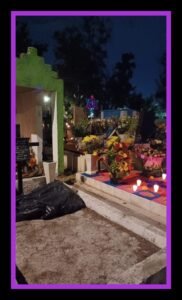
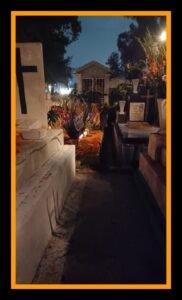
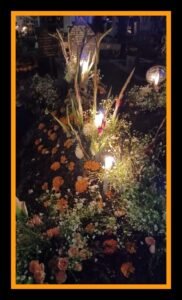
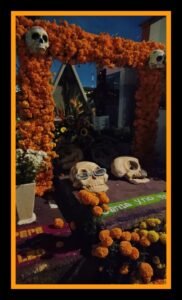
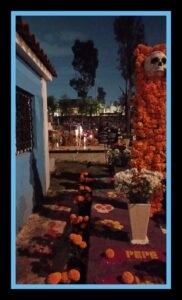
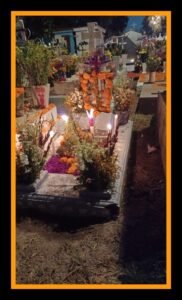
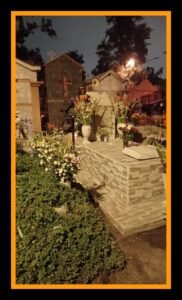
I have also taken some inspiration from the colourful ofrendas one sees at the Day of the Dead remembrances and celebrations in Mexico. During my recent visit I was extremely moved by my visit to the Cemetery in Tlahuac. I had never seen so many people in a cemetery at night, coming together as a community, all different age groups, who had decorated the graves of their ancestors with marigolds, candles, and fairy lights. Some of the people were settling down for an all-night vigil at the graves of the departed. Some people were burning incense; some were having a picnic at the graves of the deceased. While I had read about this tradition in a number of publications experiencing this first hand raises emotions that are difficult to describe. This is because of the strange incongruences of beauty, sadness, happiness and grief, joy and despair, community and aloneness, which hit me all at once. I was standing at the centre of a crossroads of human emotional states while cacophonies of emotions swept through me, challenging dualistic experiences by bringing together a wide range of human emotions into a single experience.
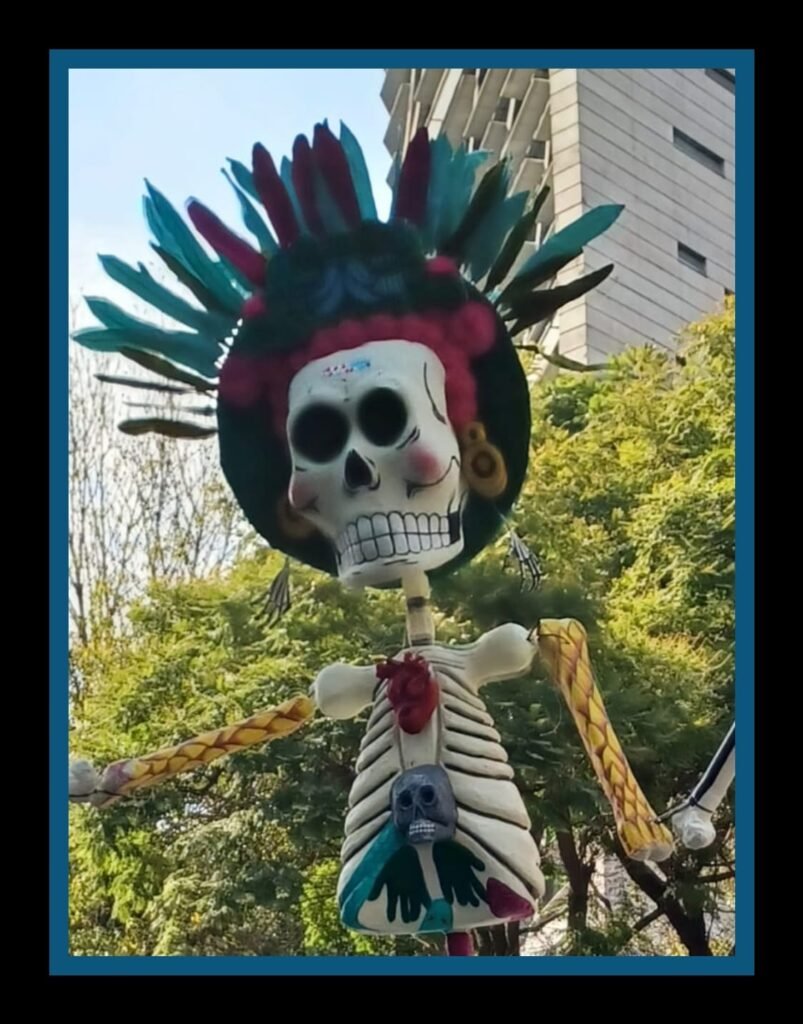
Parade, CDMX,
2025
I was also interested to see how Mexicans honour their dead and celebrate their history via the colourful parades that occur at this time of year. While it’s a well-known fact that the Day of the Dead Parade in Mexico City was inspired by the James Bond film Spectre, carnivals and processions have a long history in Mexico. It’s my view that Spectre was inspired by parades and events that were already occurring in Mexico and in turn the film inspired the more modern and bigger parade that we see in Mexico City today. Therefore I see the Mega Day of the Dead Parade as a modern expression of a culture that has very ancient roots.
Mexico is not the only country to view the cemetery as significant at that time of year. In 2024 when I visited Romania I saw many lamps in the cemeteries and learnt that on or around All Saints Day the cemeteries are all lit up with lanterns. This is a practice found in many Catholic counties throughout Europe.
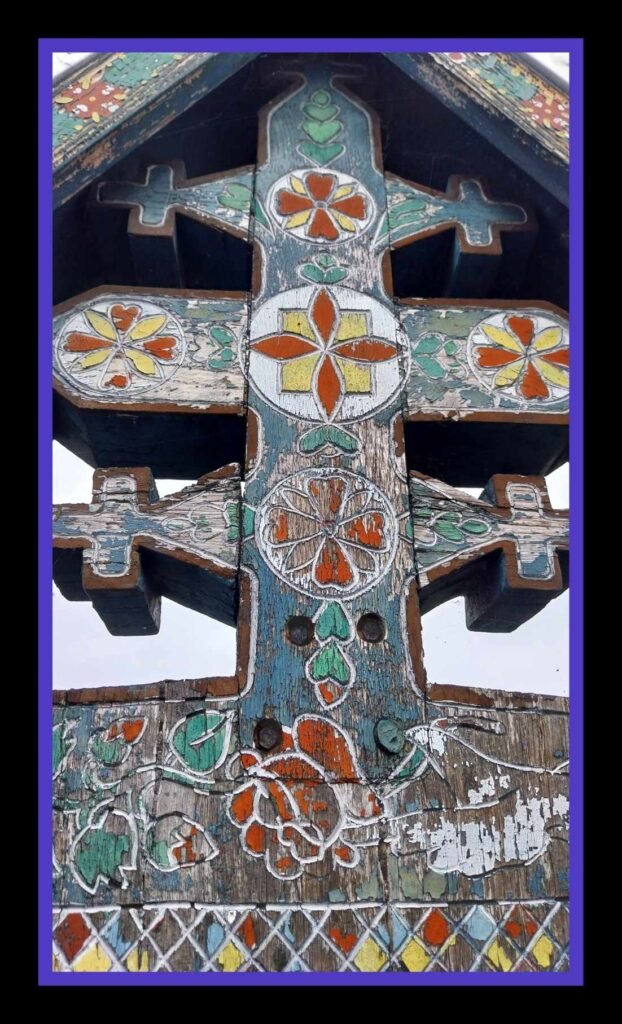
2024
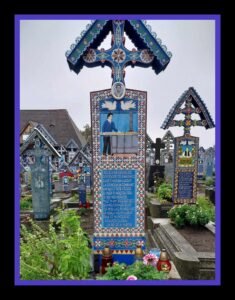
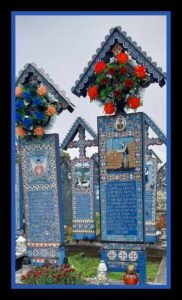
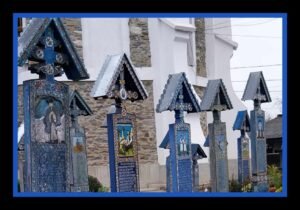
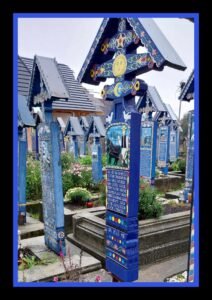
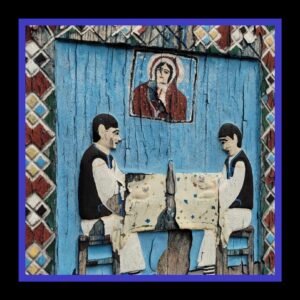
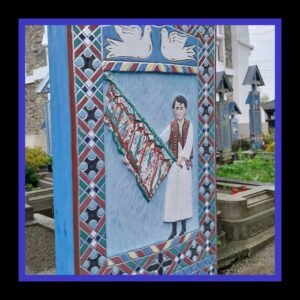
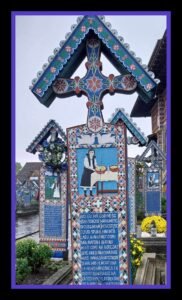
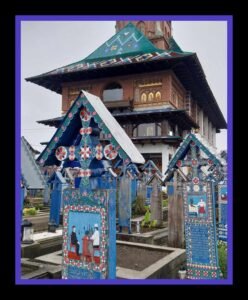
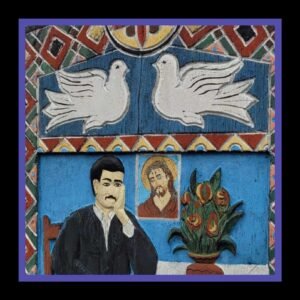
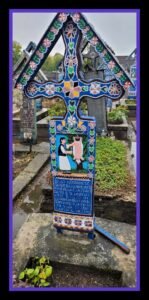
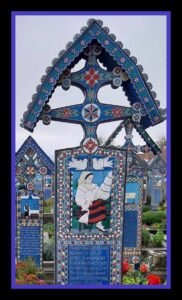
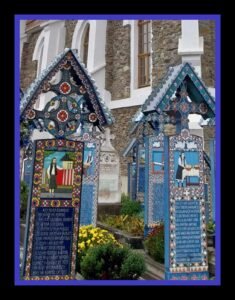
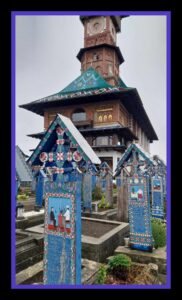
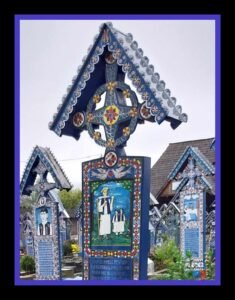
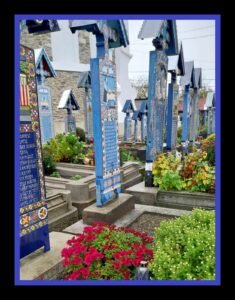
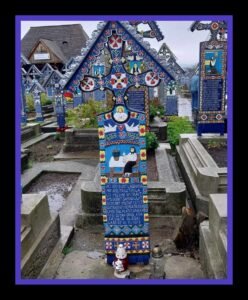
I found the cemetery in Săpânța in the Maramureș region of Romania particularly inspiring. Each grave has a very unique tombstone. While they are all carved in oak with a distinctive blue colour each headstone carries its own unique design and message. The front of the tombstone gives us a poem about the deceased’s life and the back a poem about their death. This is a new tradition started by Stan Ioan Pătraș in the 1930s, a talented sculptor, his work now being carried forward by Dumitru Pop. These unique headstones have led to the cemetery becoming known as the “merry cemetery” with the blue colour inspiring joy and some of the poems tinged with humour.
While honouring the dead by lighting the cemetery is a Catholic custom, it harks back to earlier pre-Christian customs enabling us to focus on what was and laying old ghosts to rest. It gives us a period of mourning for what we have lost and enables human grief to be honoured and dealt with.
The question has been for me is what to do with all of this? I feel the need to connect to my ancestors but my ancestors were against any attempts to make a connection.
Respecting the wishes of my ancestors I do not call on them as individuals. Some years ago I created/ discovered an entity that encapsulates the best of the spirit of the culture that I want to honour. That spirit is the spirit of the people who lived within coal mining communities.
I took all of the qualities that I had seen in miners that I liked their quiet strength, their grit and determination, their tenacity, their sense of humour, their skill and their courage and poured all of that into an entity called “Dai Lamp.” Dai being short for David is a popular name among miners and the lamp is both a nod to the traditional miner’s lamp but also to the lamp of illumination that lights the way in the darkness. Now when I feel the need for aid from my ancestors I call upon Dai Lamp who represents all of the positive qualities shown by the all of the miners that I have known, but he is not an individual deceased person, he is more like an egregore. He has a wife, Mrs Dai Lamp, the formidable Welsh mam who will protect one fiercely, but you don’t want to raise her ire. Her first name is Mair but you never call her that, it’s always Mrs Lamp. Having discovered these entities some years ago and then you know how it happens, life takes over; I have now reconnected once more to Mr and Mrs Lamp.
I won’t be re-creating a cemetery vigil in Wales. Without the whole community supporting the vigil it would not have the same magick and my deceased would not approve of it. Plus it’s not that safe being in a cemetery on one’s own at night around these parts; but I can create a shrine to Dai Lamp and Mrs Dai Lamp. This is in essence creating an altar to the spirit of Wales, its land and its people, but in particular acknowledging the spirit of the south wales coal mining communities. This is not an ofrendas as ofrendas are for the dead and the spirit of Wales is very much alive. It’s a shrine celebrating my own culture. This has the impact of connecting me to the land where I was born, to its culture and history which I feel is important. While I am a chaos magician, I am also welsh, experiencing chaos magick through the cultural background of welshness.
Uma O Hyd